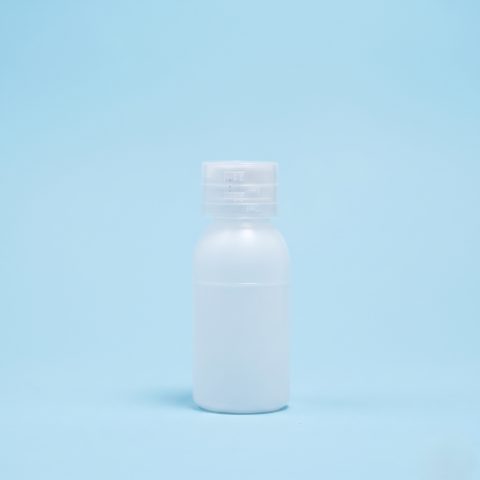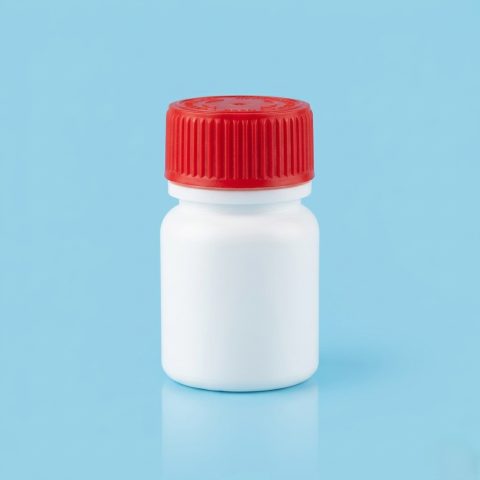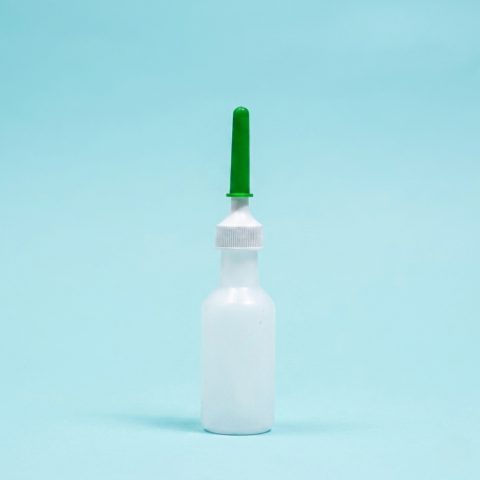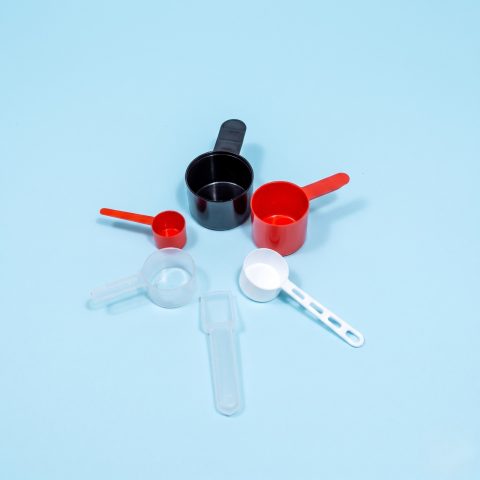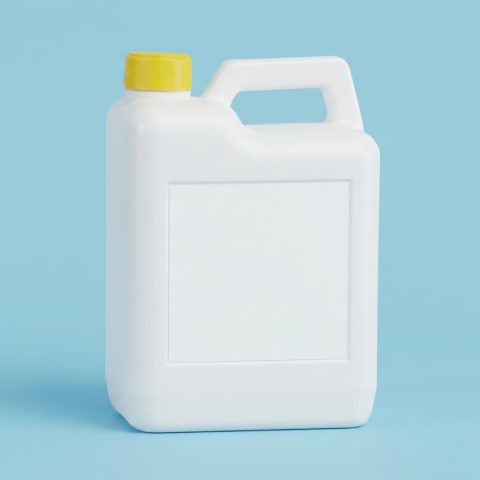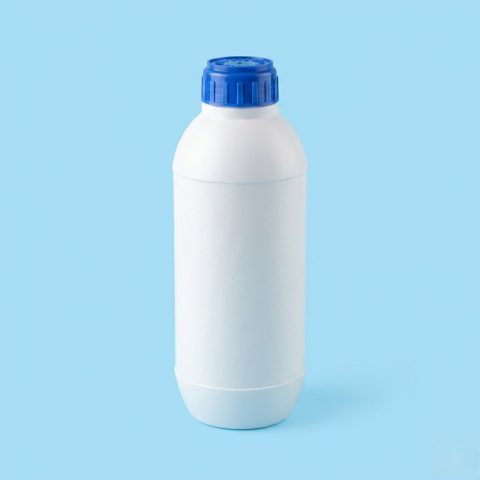
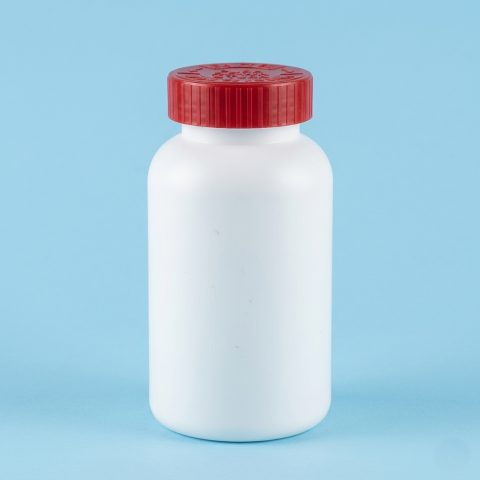
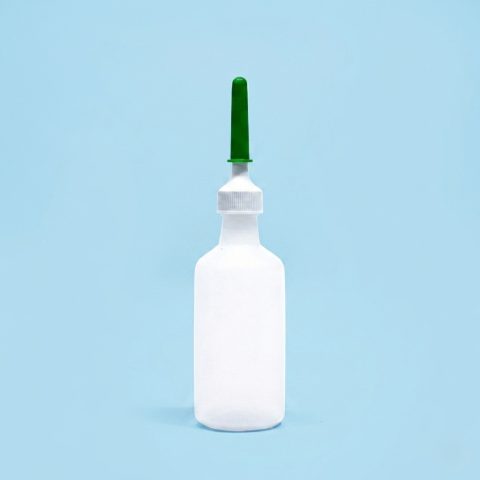
No single plastic resin fits every product. HDPE (High-Density Polyethylene) is the industry workhorse for pharmaceutical tablets, powders, agrochemicals, dairy milk cans, and industrial chemicals due to its superior moisture barrier, impact strength, and acid/alkali resistance. PET (Polyethylene Terephthalate) provides glass-like clarity and a strong oxygen/gas barrier for syrups and display jars. PP (Polypropylene) offers high stiffness and heat tolerance, making it the standard for screw caps, Child-Resistant Closures (CRC), prescription vials, and measuring scoops. LDPE (Low-Density Polyethylene) provides soft squeeze flexibility for enema bottles and inner dropper plugs.
Why Resin Selection Determines Shelf Life and Container Performance
At Modern Plaspack LLP, we mould containers, closures, and measuring devices across four primary virgin polymer resins—HDPE, PP, PET, and LDPE—at our three plants in Chhatral GIDC, Gujarat. Before selecting a bottle or jar from our 160+ standard catalog, packaging engineers and brand owners should match the polymer's physical properties to their product's chemistry, filling temperature, and end-user handling.
Engineering Comparison: HDPE vs. PET vs. PP vs. LDPE
| Property / Performance Metric | HDPE (High-Density Polyethylene) | PET (Polyethylene Terephthalate) | PP (Polypropylene) | LDPE (Low-Density Polyethylene) |
|---|---|---|---|---|
| Resin Identification Code | #2 | #1 | #5 | #4 |
| Visual Appearance | Naturally translucent or opaque white/coloured (blocks UV/visible light when pigmented) | Crystal-clear ("glass-like") or transparent amber/green | Translucent to opaque with high surface gloss | Soft translucent or opaque |
| Moisture Vapour Barrier (WVTR) | Excellent (protects hygroscopic tablets & powders from humidity) | Fair to Good | Very Good | Good |
| Oxygen & Gas Barrier (OTR) | Moderate (upgrade to 4-Layer COEX for high solvent/oxygen barrier) | Excellent (protects oxygen-sensitive syrups & oils) | Moderate | Low to Moderate |
| Chemical, Acid & Alkali Resistance | Excellent (resists strong acids, alkalis, alcohols & water-based agrochemicals) | Good for weak acids/oils; attacked by strong alkalis & ketones | Excellent chemical and stress-crack resistance | Good for aqueous solutions; swells in hydrocarbon solvents |
| Impact & Drop Strength | Outstanding (virtually unbreakable, even at low temperatures) | Good, though can crack under sharp point impact | Good at room temp; brittle below 0 °C unless copolymer | Excellent (flexible and tough) |
| Squeeze / Rigidity Profile | Semi-rigid to rigid depending on wall weight | Rigid | Rigid with high flexural memory (ideal for cap threads & living hinges) | Highly flexible & squeezable |
| Max Filling Temperature | ~65°C to 75°C | ~50°C to 55°C (deforms in hot-fill unless heat-set) | Up to 100°C+ (autoclavable / hot-fill capable) | ~55°C to 60°C |
| Modern Plaspack Products Moulded in This Resin | Round Bottles, Square Jars, Round Jars, Jerry Cans, Milk Cans, Tablet Containers | Select Pharmaceutical Packaging liquid oral bottles & clear display jars | Screw caps, CRC closures, Prescription Vials, and Spoons & Scoops | Squeeze-friendly Enema Bottles (60 ml to 200 ml) & inner plugs |
When to Choose Each Resin for Your Product
1. Choose Virgin HDPE When Moisture Protection, Drop Strength & Chemical Resistance Come First
Most industrial, pharmaceutical, veterinary, dairy, and agrochemical containers are moulded in HDPE for a simple reason: it provides the lowest Water Vapour Transmission Rate (WVTR) per rupee while surviving rough transit handling without cracking. Whether you are packing moisture-sensitive effervescent or coated tablets in a 150 cc Tablet Container, 2 kg of veterinary mineral powder in a 2 Kg Square Powder Jar With Handle, or 5 litres of corrosive liquid in a 5 Ltr HDPE Jerry Can, virgin HDPE is the safest default choice.
2. Choose PP (Polypropylene) for Closures, Vials & Precision Dosing Scoops
Because PP is stiffer and maintains tight thread tolerances without stress-cracking, injection-moulded PP is the gold standard for screw caps, two-piece Child-Resistant Closures (CRC), Prescription Vials (9 to 60 Dram), and Spoons & Scoops. Pairing a blow-moulded HDPE bottle neck with an injection-moulded PP screw cap also reduces thread galling (friction seizing) compared to mating two identical resins, ensuring smooth capping and uncapping torque.
3. Choose Squeeze-Grade HDPE / LDPE Blends for Enema & Applicator Bottles
Rectal enema solutions (60 ml, 66 ml, 120 ml, and 200 ml in our Bottles & Cans for Liquids range) require a bottle wall that collapses smoothly under gentle one-handed squeezing by a nurse or patient. Selecting low-modulus LDPE or custom LDPE/HDPE blends delivers effortless squeeze delivery with full leak-proof neck integrity.
Related guide: HDPE, LDPE, PP or PET: Which Plastic Is Used for Bottles, Caps and Inner Plugs?
Frequently asked questions
Are all resins used at Modern Plaspack 100% virgin grade?
Yes. For all pharmaceutical, veterinary, dairy, food-contact, and critical chemical applications, we use 100% virgin HDPE, PP, PET, and LDPE resins compliant with USP Class VI and TSE/BSE-free standards (Quality Control).
Can I order HDPE bottles in custom opaque colours to block UV light?
Yes. While milky white is the standard opaque finish for Pharmaceutical Packaging and Square Jars, we can mould bottles and caps in amber, black, silver, green, blue, or your exact Pantone brand shade using food- and pharma-safe masterbatches.