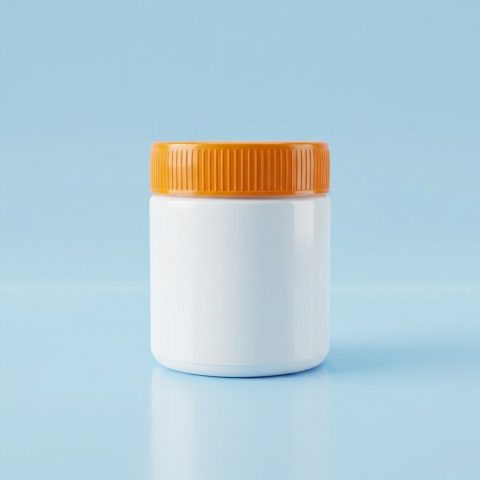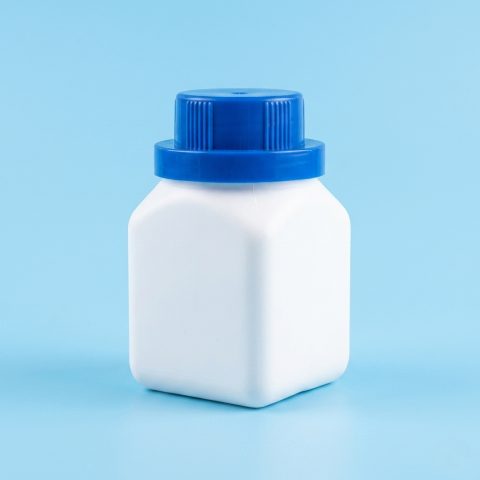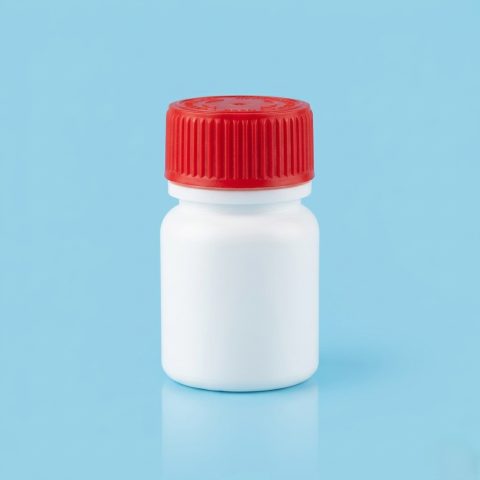
Powder jars are usually sold by weight, such as 100 g, 500 g or 1 kg. But a jar holds a fixed volume. How many grams fit inside depends on how heavy your powder is for its volume. This is called its bulk density.
Short answer
Grams that fit = jar volume (ml) × bulk density (g/ml). A light, fluffy powder fills a jar with fewer grams than a dense, granular one. Always confirm the right jar with a fill trial using your own powder.
Worked examples
Take a jar with a usable volume of 1,000 ml:
- A powder with a bulk density of 0.4 g/ml (light, like many protein powders) fills it with about 400 g.
- A powder with a bulk density of 0.8 g/ml (denser, like many mineral premixes) fills it with about 800 g.
The same jar can be a "400 g jar" for one product and an "800 g jar" for another. That is why the weight on a jar's name is a guide, not a guarantee.
How to measure your bulk density
- Weigh an empty measuring cylinder or jug.
- Pour in your powder gently up to a known volume, for example 100 ml. Don't tap or press it.
- Weigh it again. Grams of powder ÷ ml = bulk density in g/ml.
- Repeat after tapping the container a few times. Powders settle during transport, so the tapped figure tells you how much headspace you will see after shipping.
Round or square jar?
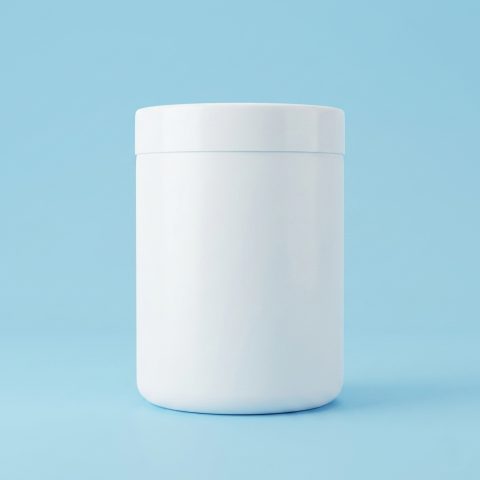
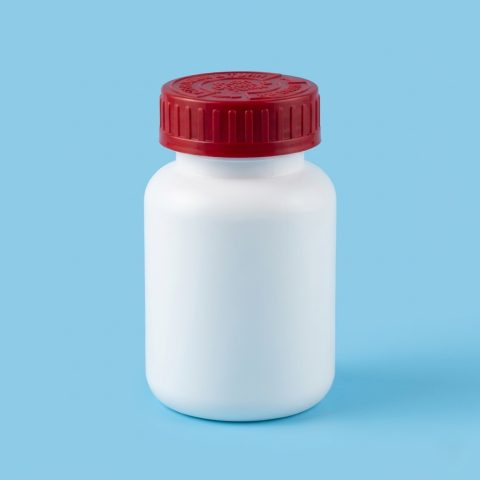
- Round jars (50 g to 2 kg) are easy to scoop from and suit screw caps well.
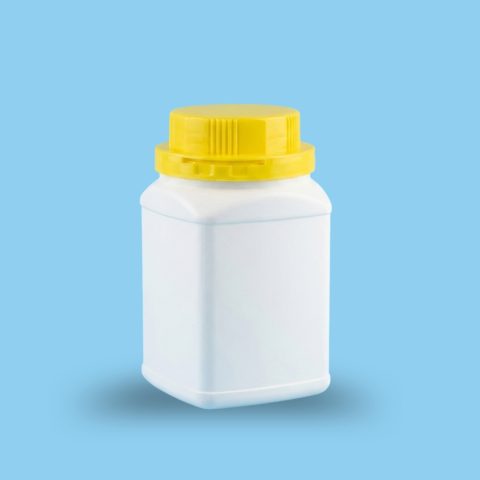
- Square jars (50 g to 2 kg) use shelf and carton space more efficiently and give flat label panels.
Tips
- Allow headspace for a scoop if you include one.
- Use an induction seal for moisture-sensitive powders.
- Send us your powder's bulk density and target fill weight, and we will suggest the jar size. Ask for a recommendation.
Need packaging for your product?Tell us your product, capacity and quantity, and we'll recommend the right container and send a quote.
Get a quote